Why Messaging Matters More Than You Think
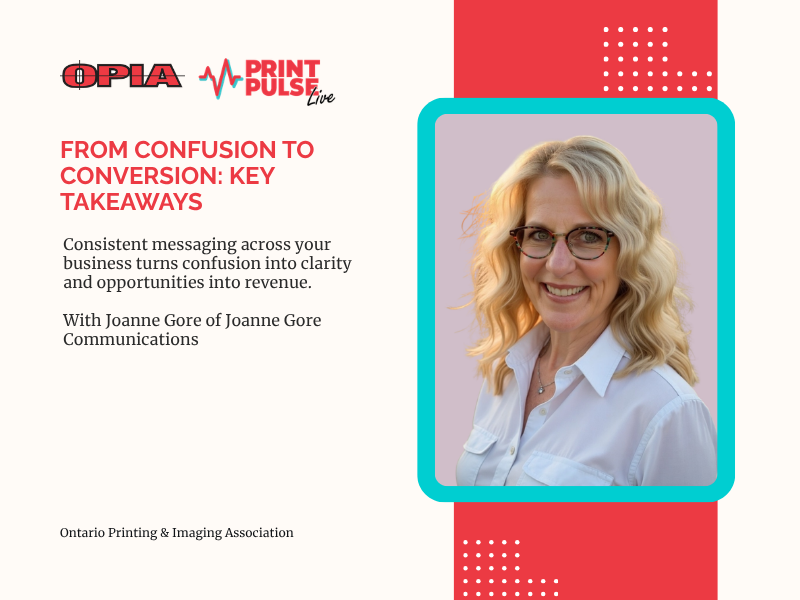
OPIA’s PrintPulse Live session on April 28, From Confusion to Conversion, focused on a common but often overlooked challenge in the print industry: inconsistent messaging. Joanne Gore demonstrated how a structured messaging playbook for print companies can align teams, reduce confusion, and ultimately improve sales outcomes.
The core issue is not a lack of marketing activity. It is a lack of consistency. When messaging varies across sales conversations, websites, LinkedIn profiles, and collateral, prospects are left uncertain about what a company actually does and how it can help them.
The Cost of Fragmented Messaging
One of the most practical examples shared during the session was the trade show experience. A prospect hears one message at a booth, reads a different one in the show guide, and sees yet another on the company’s website. The result is confusion, hesitation, and often no follow-up.
This inconsistency creates real business impact. Leads are lost, sales cycles are extended, and opportunities are missed. As highlighted in the session, many companies believe they have a lead generation problem, when in reality they have a messaging problem.
What a Messaging Playbook Actually Does
A messaging playbook for print companies serves as a single source of truth. It brings together core positioning, customer problems, differentiators, and approved language into one structured resource that can be used across the organization.
Rather than reinventing messaging for every proposal, presentation, or campaign, teams draw from a consistent foundation. This ensures that every touchpoint reinforces the same story, regardless of who is communicating it.
The session emphasized that this is not a short document. Effective playbooks are detailed, often 50 pages or more, because they account for different audiences, roles, and use cases.
Speak to the Right Audience, the Right Way
A key takeaway was the importance of tailoring messaging to different buyer roles. Leadership, sales, operations, and marketing each prioritize different outcomes, and messaging must reflect those priorities.
For example, a business owner may care about profitability and growth, while an operations manager focuses on efficiency and process reliability. Delivering the same message to both audiences reduces its impact. Delivering the right message to each increases engagement and trust.
This structured approach ensures that companies are not just consistent, but also relevant in every interaction.
The Role of AI and the Risk of “AI Slop”
The session also addressed the growing use of AI in content creation. While AI can generate content quickly, its effectiveness depends entirely on the quality of the inputs.
Without a clear messaging framework, AI-generated content often becomes generic, repetitive, and disconnected from the company’s unique value. This “AI slop” can erode trust rather than build it.
With a messaging playbook in place, however, AI can be guided to produce content that reflects the company’s voice, positioning, and priorities.
A Practical Starting Point
For companies looking to improve their messaging, the session outlined a simple starting framework:
- Audit key touchpoints such as your website, sales materials, and recent content
- Create a one-page foundation including positioning, customer problems, differentiators, and proof points
- Use this foundation consistently across all communications
From there, the playbook can evolve into a more detailed resource that supports the entire organization.
Why This Matters for Print Businesses
In a competitive market, clarity is a differentiator. Print companies that communicate clearly and consistently are more likely to attract the right prospects, build trust, and convert opportunities into long-term relationships.
As demonstrated in this session, a messaging playbook for print companies is not a branding exercise. It is a practical tool that aligns teams, supports sales, and drives measurable business results.
PrintPulse Live continues to bring practical, real-world insights to Ontario’s print and graphic communications industry. Watch for future sessions as OPIA explores the strategies and tools shaping the future of print.